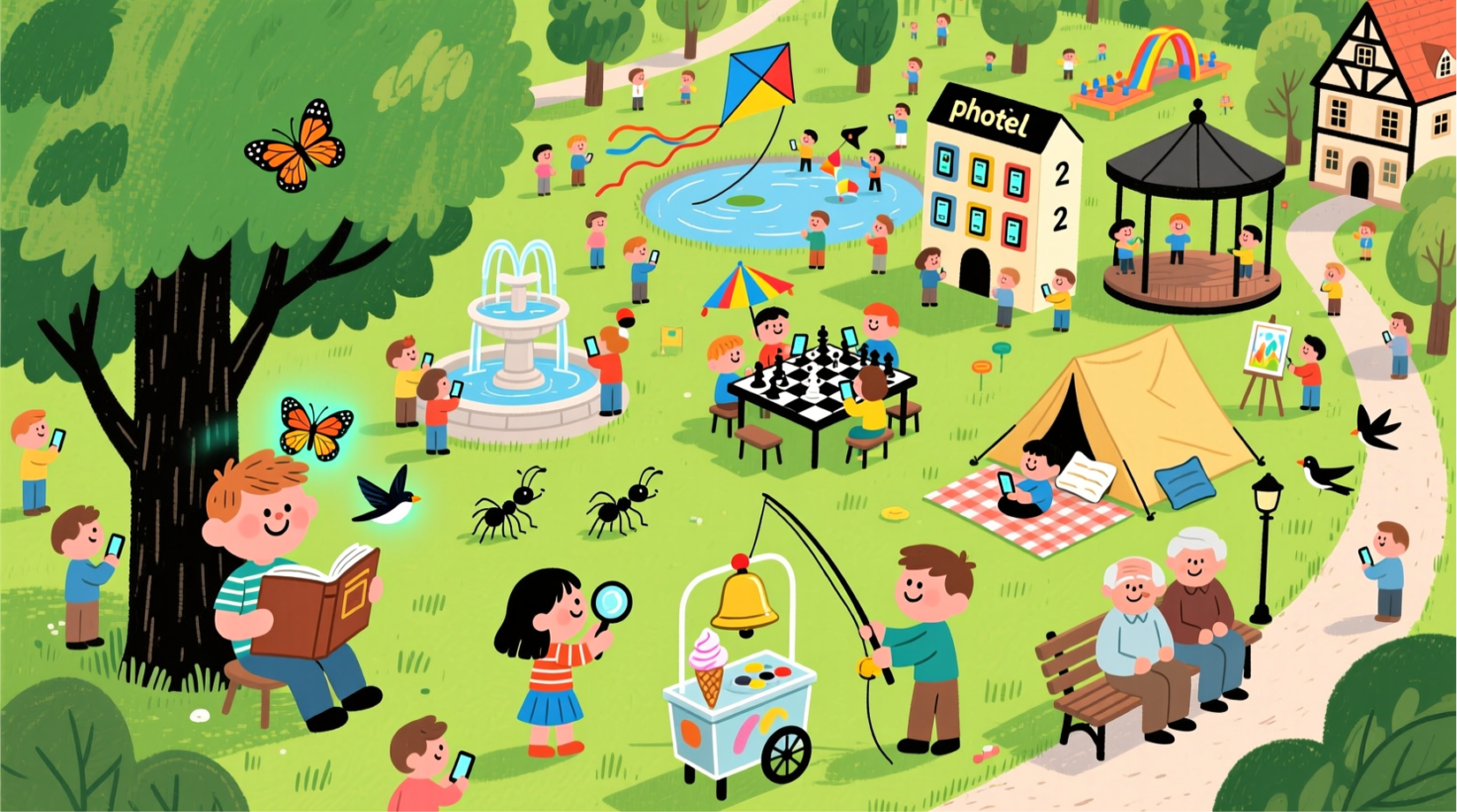
Attention as the Scarcest Resource: How Digital Environments Reshape the Cognitive Conditions of Learning
On what happens to the mind’s capacity to concentrate when everything is built to interrupt it
Why Attention Is the Bottleneck
Understanding does not happen in a flash. It is built, slowly, as the mind holds several ideas at once, turns them over, connects them, and gradually moves them from fragile short-term memory into durable knowledge. This process is fragile precisely because working memory is tiny — it can juggle only a handful of items at a time — and every interruption knocks pieces off the table. Concentration is not a nicety that makes learning pleasant. It is the mechanism by which learning physically occurs.
This is why attention, not information, is the true scarce resource in education. We are drowning in available content; what we lack is the sustained focus to absorb any of it deeply. A student with infinite access to lectures but a shattered attention span will learn less than a student with one good book and an hour of quiet. The binding constraint has quietly shifted from getting material in front of people to getting people to attend to it. Almost everything else in learning depends on winning that fight first.
The Machinery Built to Interrupt
The devices that now fill every spare moment were not designed to be neutral tools. Many of the most successful products are engineered, explicitly, to maximize the time and frequency of engagement, because attention is what they sell. Notifications, infinite feeds, autoplay, and the variable rewards of a refresh are not accidents; they are the considered output of teams whose job is to make putting the thing down feel slightly uncomfortable. The result is an environment that actively trains the opposite of the habit learning requires.
What this machinery cultivates is a reflex to switch. The mind, rewarded thousands of times for checking, glancing, and skipping, learns to crave novelty and to flinch from sustained effort. Boredom, which is often just the early, uncomfortable stage of deep engagement, becomes intolerable, instantly relieved by a glowing rectangle. A generation is being conditioned, all day and from a very young age, in precisely the cognitive habits that make concentration hard. The classroom then asks for the one thing the rest of life has taught the mind to avoid.
How Digital Environments Undermine Deep Learning
Working memory is tiny: it juggles only a few items at once, and every interruption knocks pieces off the table.
Products fight focus: feeds, notifications, and autoplay are engineered to maximize engagement, training the reflex to switch.
Multitasking is a myth: rapid switching carries real costs — shallower learning and worse memory, even when it feels productive.
Focus can atrophy: concentration behaves like a muscle; rarely exercised, it weakens until deep reading feels uncomfortable.
Attention is trainable: protected single-task time and distance from devices rebuild the capacity, slowly but reliably.
The Myth of Multitasking
A common defense holds that young people have simply adapted — that they can study while messaging, learn while a feed scrolls, and handle several streams at once. The research is stubbornly unkind to this idea. What feels like multitasking is really rapid switching, and every switch carries a cost: a moment of reorientation, a dropped thread, a fact half-encoded. Studies consistently find that divided attention produces shallower learning, worse memory, and more errors, even as the multitasker feels productive and busy.
The feeling of competence is itself part of the trap. Switching is stimulating; it keeps the mind pleasantly aroused and creates an illusion of efficiency. Deep, single focus, by contrast, often feels effortful and slow precisely because real cognitive work is happening. So the mind, left to its preferences, reliably chooses the mode that feels good and learns less over the mode that feels hard and learns more. Recognizing this gap between the sensation of productivity and its reality is the beginning of taking attention seriously as a thing to be protected.
What Fragmentation Does Over Time
The worry is not only about any single distracted study session. It is about what years of fragmented attention do to the underlying capacity. Concentration behaves something like a muscle: exercised, it strengthens; neglected, it weakens. A mind that rarely practices sustained focus may find it progressively harder to summon, until reading a long, demanding text or following a complex argument feels almost physically uncomfortable. The skill does not vanish, but it atrophies, and atrophy is hard to notice from the inside.
This matters enormously for education because the most valuable kinds of learning are exactly the ones that demand the most sustained attention. Anyone can absorb a quick fact. Grasping a difficult proof, following a subtle historical argument, losing oneself in a serious book — these require staying with something long after the initial novelty fades. If the broader environment is steadily eroding the capacity for that staying, it is undermining education at its root, regardless of how good the schools or the content happen to be.
| The Felt Experience | What Is Actually Happening |
|---|---|
| “I can study and message at once” | Rapid switching that drops threads and weakens memory |
| Switching feels productive | Stimulation masks shallower, slower real learning |
| “I just can’t focus anymore” | A predictable result of an environment built to fragment focus |
| Boredom feels intolerable | Often the early, uncomfortable stage of deep engagement |
| Willpower should be enough | Managing the environment beats fighting engineered systems head-on |
The Classroom Caught in the Middle
Teachers now compete, hour by hour, with the most sophisticated attention-capture systems ever built, and it is not a fair fight. A lesson, however good, cannot match the engineered intensity of an endless feed designed by experts to be irresistible. Schools have responded in scattered ways — banning phones, building digital-free periods, or in the opposite direction, leaning into devices and hoping to ride the wave. The results are mixed, and the debate is often more ideological than evidence-based.
What is clear is that pretending the problem does not exist serves no one. A classroom that ignores the attentional environment its students inhabit is preparing lessons for minds that no longer function the way the lessons assume. Some of the most thoughtful schools now treat attention itself as something to be taught and protected — building stretches of genuine, uninterrupted focus into the day, naming the difficulty honestly, and helping students experience the deep satisfaction of concentration that the rest of their lives rarely lets them feel.
Reclaiming the Capacity
If attention is a trainable capacity, then it can be rebuilt, and this is the hopeful part of the story. The methods are unglamorous and well known: protected stretches of single-task work, physical distance from the devices engineered to interrupt, the deliberate practice of staying with something past the point of boredom. None of this is mysterious. It is simply difficult, because it runs against an environment optimized to make it difficult, and because the rewards arrive slowly while the temptations arrive constantly.
For students, the most useful realization may be that the struggle to concentrate is not a personal failing but a predictable result of being immersed in systems built to fragment focus. That reframing turns shame into strategy. The work then becomes managing the environment — turning off the notifications, leaving the phone in another room, choosing the conditions under which deep work is possible — rather than relying on willpower to win a fight that willpower alone is designed to lose. Attention, once understood as scarce and valuable, can be guarded.
An Educational Priority Hidden in Plain Sight
Schools and universities spend enormous energy on curriculum, assessment, and technology, and comparatively little on the precondition that makes all of it work. Yet a student who cannot concentrate cannot be educated, no matter how excellent the syllabus. It is strange that the capacity on which everything else depends receives so little explicit attention, while the downstream activities it enables receive so much. The scarce resource is treated as if it were free and infinite, which is exactly how it is being depleted.
Taking attention seriously would mean treating it as a central educational goal rather than an assumed background condition. It would mean teaching students how their own minds work, why focus is hard, and how to protect it — knowledge at least as valuable as any subject on the timetable. In an economy organized around capturing attention, the ability to direct one’s own may be the most important thing a school can cultivate. It is also, increasingly, the rarest, which is precisely why it deserves to move from the margins to the center.
The Fight Worth Having
There is a tendency to treat concern about attention as nostalgic hand-wringing, the eternal complaint of elders about the young. But the difference now is one of scale and intent. Earlier distractions were incidental; today’s are engineered, funded, and relentless, aimed deliberately at the very faculty learning depends on. To notice this is not to romanticize the past. It is to recognize that the cognitive conditions of education have changed, and that ignoring the change does not make it less real.
The good news is that attention remains, in the end, ours to direct, if we decide it is worth defending. That decision — individual and institutional — is the quiet fight beneath every other education debate. Curriculum, technology, and reform all assume a mind capable of focusing on them. Protecting that capacity, in students and in ourselves, may turn out to be the essential educational task of the age, the one on which the success of every other rests. The scarcest resource is the one most worth guarding.
Teaching the Mind to Notice Itself
One underused remedy is simply helping students understand their own attention — how it works, why it fragments, and what reliably restores it. Most learners have never been told that working memory is tiny, that switching carries a cost, or that the discomfort they feel a few minutes into a hard text is often the doorway to real engagement rather than a sign to quit. Naming these mechanisms turns a vague sense of personal failure into something concrete and manageable, which is the first step toward managing it at all.
This kind of metacognition — thinking about one’s own thinking — may be among the most valuable things a school can teach in a distracted age. A student who can recognize when their focus is slipping, who knows that the urge to check a device is engineered rather than natural, and who has practiced the small rituals that protect concentration carries a defense the curriculum alone cannot provide. In a world built to fragment attention, knowing how your own mind is being acted upon is a form of literacy, and arguably one of the most practical lessons available.
Frequently Asked Questions
Is multitasking really bad for learning?
Yes. What feels like multitasking is rapid switching between tasks, and each switch carries a cost in lost focus and dropped information. Research consistently finds divided attention produces shallower learning and worse memory, even though the multitasker feels busy and efficient. The sensation of productivity is part of the trap, not evidence against it.
Can a damaged attention span be rebuilt?
Largely, yes. Concentration behaves like a trainable capacity: neglected it weakens, practiced it strengthens. Protected stretches of single-task work, physical distance from interruptive devices, and the deliberate habit of staying with something past boredom all help. The methods are simple but difficult, because they run against an environment designed to defeat them.
Why is attention more important than access to information?
Because information is now abundant and attention is scarce. Understanding is built by holding ideas in mind long enough to connect them, and that requires sustained focus. A student with endless content but fractured attention learns less than one with a single book and an undisturbed hour. The binding constraint has shifted from getting material to attending to it.
Guard the Capacity Everything Depends On
Beneath every debate about curriculum and technology sits a quieter precondition: a mind able to concentrate long enough to learn. That capacity is being depleted, deliberately, by systems built to capture and fragment it, and the depletion is easy to miss from the inside.
Treating attention as a scarce resource to be protected — in students and in ourselves — may be the essential educational task of the age. Curriculum, content, and reform all assume a focused mind. Defending that focus is the fight beneath all the others.
In an economy built to capture attention, directing your own is the rarest skill of all.
This article is for general educational purposes and is not medical or psychological advice. For background, see the attention economy and cognitive load theory.