Student Debt as Macroeconomic Drag: How a Generation’s Borrowing Reshapes Housing, Family Formation, and Consumption
On the long tail of borrowing for a degree, and the economy it quietly reorders
From Personal Burden to National Pattern
A single person’s student loan is a manageable problem; tens of millions of them, held by a cohort at the same stage of life, are a structural one. When a large share of young adults all carry monthly debt payments, their collective behavior shifts in measurable ways. They delay big purchases, hold off on commitments that require financial stability, and devote income to servicing debt that would otherwise flow into the economy as spending and investment. The aggregate of millions of deferred decisions is not noise; it is a trend with real economic weight.
What makes student debt distinctive among forms of borrowing is that it lands at the very start of adult life, before earnings have ramped up and during the years when people traditionally form households. A mortgage is taken on by people with established incomes; student debt is taken on by people who have not yet begun to earn. That timing is precisely what gives it such leverage over the life decisions that follow, because it constrains people exactly when they are making the choices that shape the next several decades.
The Housing Channel
Homeownership is the clearest channel through which student debt reshapes the economy. A large monthly loan payment reduces the income available to save for a down payment and worsens the debt-to-income ratios lenders examine, making mortgages harder to qualify for. The result is that indebted graduates tend to buy homes later, or not at all, compared with earlier generations at the same age. Since housing is a vast sector that pulls along construction, furnishing, and local spending, a delay in home buying ripples far beyond the individuals involved.
The effect compounds over time. Delayed entry into homeownership means delayed accumulation of home equity, historically a major source of household wealth. A generation that buys later builds wealth more slowly, which affects everything from retirement security to what they can pass to their own children. Debt taken on at twenty can shape a balance sheet at sixty, and through it the wealth of the generation after that.
How Education Debt Reshapes a Generation
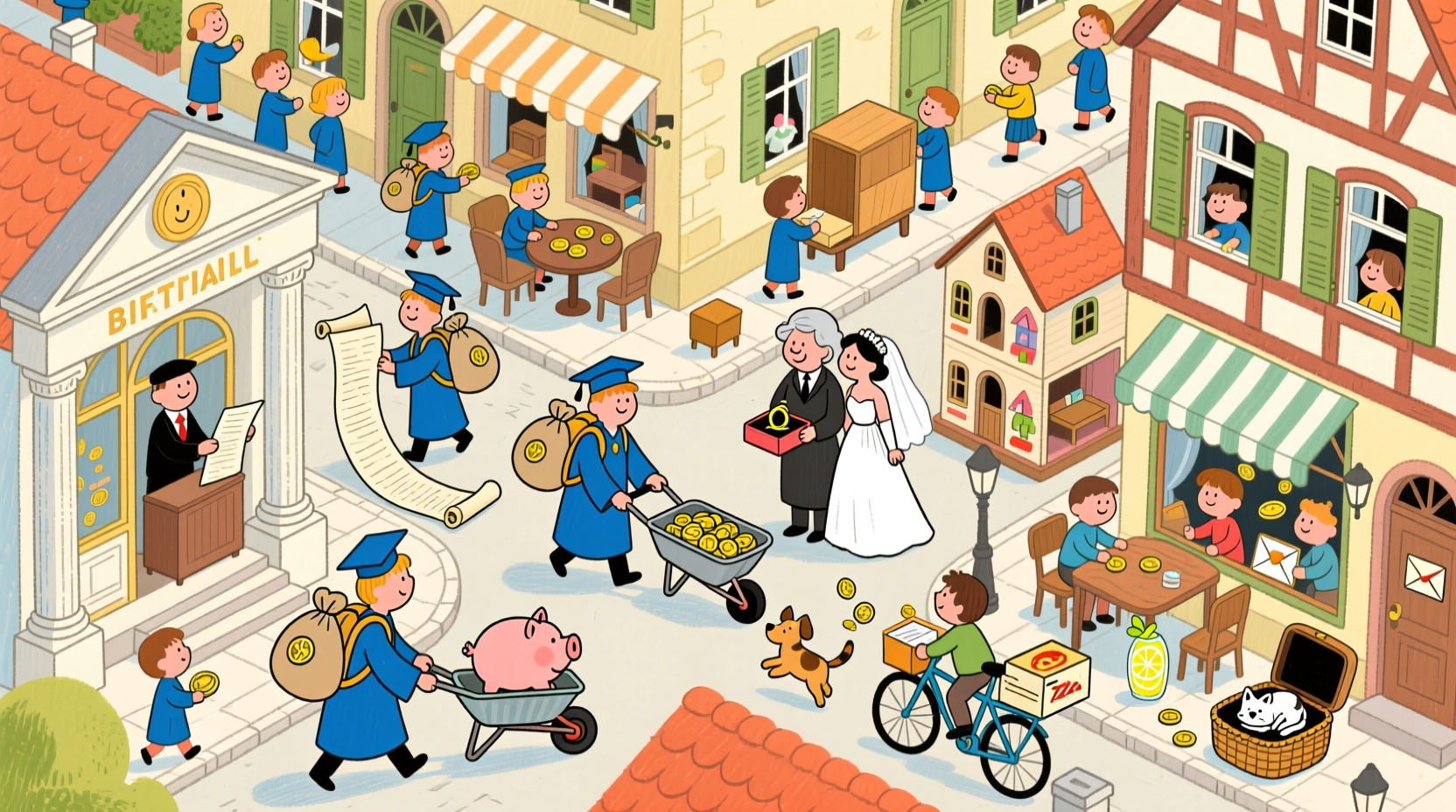
Housing. Later down payments and home purchases, and slower wealth-building.
Family formation. Delayed marriage and childbearing under financial pressure.
Consumption. Income diverted to payments softens demand across the economy.
Entrepreneurship. Fixed debt discourages the risk-taking that creates new firms.
The Family-Formation Channel
Money and family timing are entangled in ways people rarely discuss openly, but the data are fairly consistent: heavy debt loads correlate with delayed marriage and delayed childbearing. People who feel financially precarious tend to postpone the commitments that feel like they require stability, and a large monthly payment that stretches a decade or more is a powerful source of felt precarity. The decision to start a family is partly an economic one, and student debt presses on exactly the years when that decision is usually made.
This matters beyond the individuals because demographic patterns shape long-run economic destiny. Falling and delayed fertility reshapes the future workforce, the ratio of workers to retirees, and the sustainability of pension and health systems. When a society loads its young adults with debt at the family-forming stage of life, it should not be surprised to see family formation shift, with consequences that unfold over generations rather than years.
The Consumption and Entrepreneurship Channel
Beyond houses and families, student debt dampens ordinary consumption and risk-taking. Income that services loans is income not spent on goods, services, and experiences, which softens demand across the economy. The effect is modest per person but meaningful in aggregate, especially in economies where consumer spending is the main engine of growth. A generation servicing large debts is a generation with less discretionary money to circulate.
Debt also suppresses entrepreneurship, a quieter but important cost. Starting a business usually means a period of low or no income and a tolerance for risk, both of which heavy fixed debt payments discourage. A would-be founder with a large monthly loan obligation is far more likely to take a safe salaried job to keep up payments. Since new firms are a major source of innovation and job creation, debt that deters business formation may cost the economy some of its dynamism, in a way that never appears on any individual loan statement.
| Channel | Macroeconomic Effect |
|---|---|
| Down-payment savings | Delayed homeownership and equity-building |
| Family timing | Lower and later fertility, demographic shifts |
| Discretionary spending | Softer consumer demand in aggregate |
| Business creation | Less new-firm formation and innovation |
| Loan structure | The main lever for softening the drag |
Why the Drag Is Easy to Miss
Part of what makes this so insidious is its invisibility. There is no single moment when student debt causes a recession; instead it exerts a slow, diffuse pressure that shows up as trends — later home buying, later families, slightly softer spending — rather than dramatic events. Diffuse pressures are easy to overlook and easy to attribute to other causes, which is part of why the macroeconomic dimension of student debt was underappreciated for so long.
There is also a tendency to treat the debt purely as a moral question about individual responsibility rather than an economic one about aggregate effects. Whether or not borrowers should have borrowed is a separate matter from what the borrowing does to the economy once it has happened at scale. Confusing the two debates makes it harder to see the structural picture clearly, and harder to design policy that addresses the macroeconomic reality rather than relitigating individual choices.
Weighing the Whole Ledger
None of this means education debt is simply bad. The borrowing funds human capital that, on average, raises lifetime earnings and productivity, which benefits the economy too. The honest accounting weighs the long-run gains from a more educated population against the near-term drag from servicing the debt that financed it. The balance depends on how much the education actually raised earnings, how heavy the debt is relative to those earnings, and how the loans are structured.
That last point is where policy has the most leverage. Loan terms that scale payments to income, protect borrowers in lean years, and avoid crushing those whose degrees did not pay off can preserve the benefits of educational investment while softening its macroeconomic drag. The question is not whether to let people borrow for education, but how to structure that borrowing so it does not quietly reorder a generation’s housing, families, and spending in ways no one chose.
What Happens in a Downturn
Student debt behaves differently from most household debt during economic downturns, and that difference amplifies its macroeconomic role. In many systems education loans cannot easily be discharged even in bankruptcy, so they follow borrowers through job losses and recessions when other debts can be restructured. A graduate who loses work still owes the same monthly payment, which means the debt acts as a fixed drag exactly when the economy most needs households to keep spending. Instead of cushioning a downturn, this category of debt can deepen it.
The timing of when cohorts enter the labor market matters enormously here. Those who graduate into a recession tend to start at lower wages and recover slowly, a scarring effect that lasts years, yet they carry the same debt as luckier cohorts who graduated into a boom. The result is that the burden of education debt falls unevenly across cohorts in ways no one chose, concentrating hardship on those unlucky in their timing and adding a generational dimension to the economic drag. A policy that ignores this cyclical pattern will consistently underestimate how heavily the debt presses during exactly the periods when its weight does the most damage.
Designing Debt That Does Less Harm
If education debt is going to remain a feature of how societies fund human capital, the practical question becomes how to design it so its macroeconomic drag is as light as possible. The most promising ideas tie repayment to income, so that obligations rise when a graduate prospers and fall when they struggle, with payments pausing entirely below a threshold. This converts a fixed monthly burden into something closer to a contingent contribution, which is far gentler on housing, family formation, and spending precisely when borrowers can least afford a rigid payment. It also shifts some of the risk from the individual, who cannot diversify, to the system, which can.
Other design choices matter too: capping total repayment so debt cannot balloon indefinitely, ensuring that borrowers whose degrees did not pay off are not crushed for life, and giving people clear, honest information about likely earnings before they borrow. None of these eliminate the trade-off between funding education and the burden of doing so, but they shape it. A society can choose whether its education debt sits lightly on the choices of its young adults or presses heavily on exactly the years when they are forming households and starting careers. The drag is not a force of nature; it is largely a product of how the loans are written, and therefore something policy can soften deliberately.
The Bigger Question of How We Fund Human Capital
Step back far enough and student debt is really a symptom of a deeper question: how should a society pay for building the skills of its people? Loading the cost onto individuals through debt is one answer, and it has the appeal of asking those who benefit to contribute. But it also concentrates risk on the least-established members of society at the most fragile point in their financial lives, and the macroeconomic drag explored here is the aggregate price of that choice. Other societies fund more of the cost collectively through taxation, on the logic that an educated population benefits everyone and that spreading the cost broadly avoids piling it onto the young.
Neither approach is obviously right, and each carries trade-offs in fairness, efficiency, and who bears the burden. What the macroeconomic lens adds to that debate is a reminder that the costs of heavy individual borrowing do not stay with the borrower. They leak out into housing markets, fertility rates, consumer demand, and the rate of new business formation, becoming everyone’s problem whether or not everyone borrowed. A serious conversation about funding human capital has to weigh those diffuse, society-wide effects alongside the direct question of who should pay — because the way a society chooses to finance education quietly shapes the economy that education was meant to strengthen.
Frequently Asked Questions
Does student debt actually hurt the economy, or just borrowers?
Both. Individuals bear the direct burden, but when a whole cohort carries debt at the same life stage, their delayed home purchases, family formation, and spending become an aggregate drag that affects the broader economy.
Is borrowing for education a mistake, then?
Not necessarily. Education debt funds human capital that often raises lifetime earnings and benefits the economy. The issue is the scale, the structure of the loans, and whether the education delivered the earnings to justify the borrowing.
What policy changes would reduce the drag?
Income-driven repayment, protections during low-earning years, and avoiding ruinous debt for degrees that did not pay off can preserve the benefits of educational investment while easing its pressure on housing, families, and spending.
Count the Cost Beyond the Borrower
Borrowing for a degree looks like a private bet, but multiplied across a generation it becomes a quiet macroeconomic force, pushing back the age at which people buy homes, start families, and spend freely.
The borrowing funds real human capital and is not simply a mistake. The task is to structure it — through income-based repayment and sensible protections — so that financing education does not silently reorder the economic life of those who finance it.
What a generation owes shapes the economy it builds.
This article is for general educational purposes and is not financial advice. For background, see student debt, and macroeconomic analysis from the IMF and the OECD.